


 Filter Filter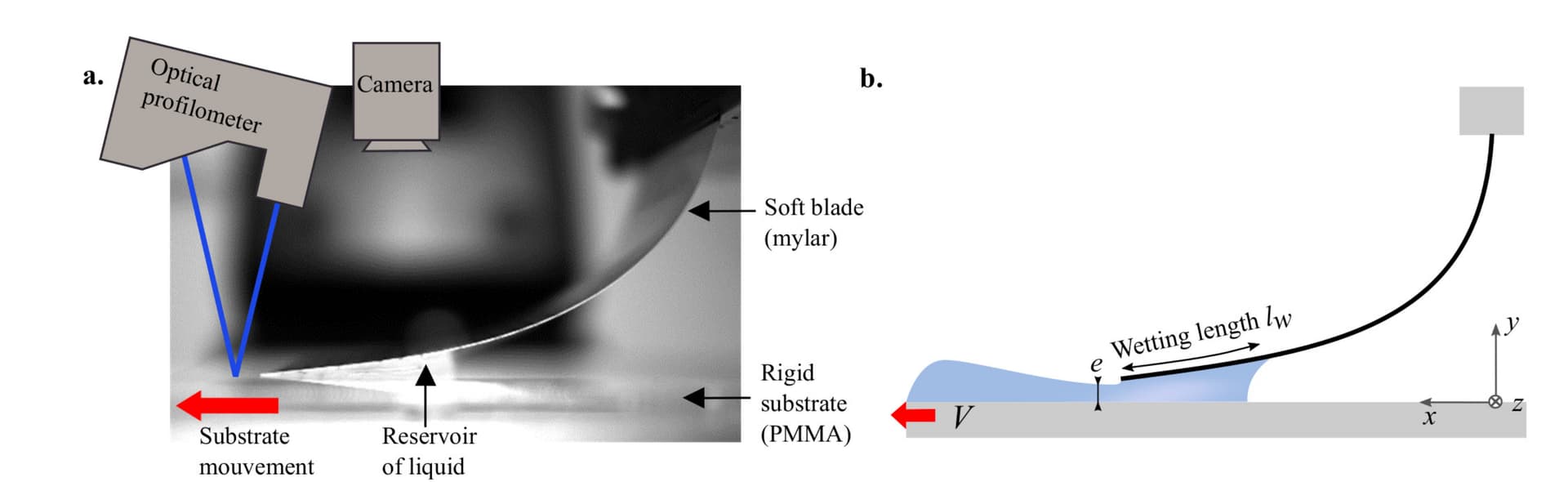
10.52843/cassyni.p0mv9w
- Oct 6, 2023
- Jean-François Joanny
The spreading of complex fluids is essential in many industrial processes for example in the cosmetic industry. We study here the spreading of complex fluids in two different geometries: dip coating experiments where a rod is pulled out of a yield stress fluid and soft blade experiments where a coating film is obtained by squeezing a liquid drop with a soft elastic blade. In the dip coating experiment with a yield-stress fluid, we show that the thickness of the coating film does not follow the classical Landau-Levich theory which is based on the drainng of the film. Rather the thickness of the film is limited by the hydrodynamics of the bulk reservoir. We propose scaling laws for the film thickness and discuss the cross over between thes two possible behaviors. In the soft blade experiment we first study simple non-newtonian fluids an show the importance of the wetting length, which measures the ize of the blade a the tip wetted by the fluid. We then generalize our study to shear-thinning and normal stress fluids.

10.52843/cassyni.jx67wn
- Sep 27, 2023
- Jens Eggers
Cusp shapes are widely observed in nature, most famously as the bright caustic lines on the inside of a coffee cup. This can be understood from the fact that a cusp arises from the smooth deformation of a parameterized curve. Remarkably, the same generic cusp can be formed on the surface of a viscous fluid with surface tension, as demonstrated by Jeong and Moffatt [1], using complex mapping techniques. However, his observation is limited to very specific and idealized geometries. Here we demonstrate that cusps are indeed local solutions to the Stokes equation with surface tension, regardless.

10.52843/cassyni.j2rqld
- Sep 22, 2023
- Grace Pender
*Cannabis sativa* is a multipurpose crop with numerous beneficial applications for people and the planet. The uses of Cannabis range from the pharmaceutical sector to the building materials industry. Agrobacterium-mediated transient transformation is a highly useful method for gene function studies, and has been established in many diverse plant species. However, because of the widespread ban of Cannabis cultivation and research over the past century, a high-throughput and reproducible transient transformation system in Cannabis has not been established and optimised to the same extent as for other plant species. Here, we describe a protocol for Agrobacterium tumefaciens mediated transient transformation in Cannabis leaves, using the RUBY reporter construct, which encodes the enzymes in the betalain biosynthesis pathway. The protocol utilises an “agroinjection” method, whereby Agrobacterium is injected into Cannabis leaves. To optimise this protocol, different induction buffers, cultivars of Cannabis, and developmental stages of Cannabis plants were tested to establish the optimal conditions to achieve reliable transient transformation. Transformation efficiency was determined by quantifying the amount of betalain pigment present in the transformed leaf tissue. Further, this protocol was tested for its efficacy for protein subcellular localisation assays using fluorescent protein markers. This method is an efficient and easy way of determining transformation efficiency and selecting transformants in Cannabis without specialised equipment, and can be used for assessing gene function and protein localisation assays. **Co-Authors**: Seán Kettle, Aditya Nayak, Alice Destailleur, Rainer Melzer, Susanne Schilling

10.52843/cassyni.zglvxz
- Sep 21, 2023
- Barry Simon
On Friday, Jan 14, 2022, I had a draft of a single author paper intended for the Lieb Festschrift. Six days later, the paper had three coauthors. This talk will explain the interesting story, expose some underlying machinery and sketch the proof of a lovely inequality on certain finite sums.
10.52843/cassyni.rys1pw
- Sep 7, 2023
- Steven Barrett
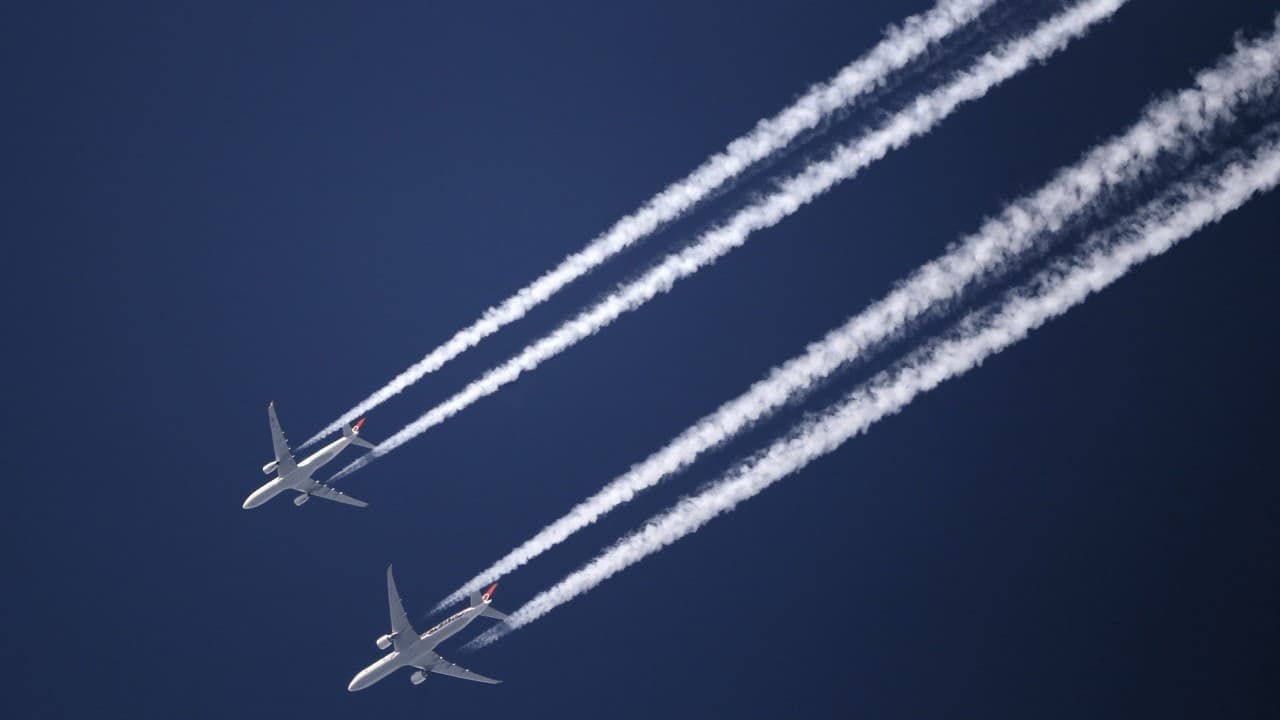
Civil aviation is a rapidly growing mode of transportation, one that has long time constants, and one that is extremely tough to decarbonize. In addition, aviation is unique in that emissions occur at high altitude, and this provides for a mechanism by which aviation emissions cause around twice the warming that the same emissions on the surface would cause. This talk will outline the long-term environmental challenges facing aviation and how we can move towards a zero environmental impact aviation sector. Parts of the solution discussed will focus on: (1) the fuel-energy system, where various alternative fuel options are being considered (including hydrogen and sustainable aviation fuels), (2) operational measures that can mitigate contrail warming from aviation, and (3) a potential way to apply emissions control technology from ground transportation to aviation that could reduce >90% of the air pollution impacts of aviation. Finally, the talk will move from addressing the climate and air pollution challenges of today's civil aviation to preempting the noise challenge of future drone services such as aerial package delivery. In particular the prospects for "solid state" propulsion for drones will be discussed.
10.52843/cassyni.4tjsks
- Aug 22, 2023
- Oscar Diaz-Ibarra
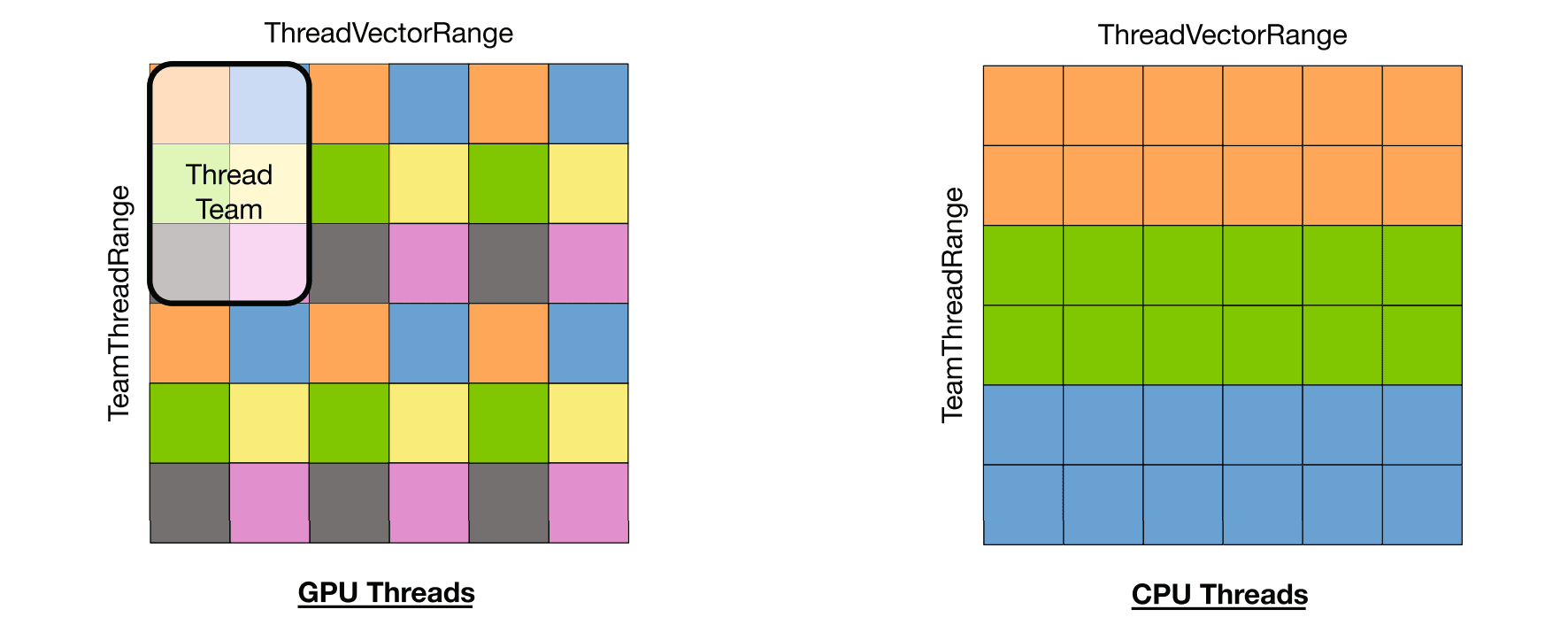
We present TChem, a performance portable software toolkit to enable the analysis of complex kinetic mechanisms. The software provides tools for gas-phase and surface chemistry, thermodynamic properties, and implements formulations for several canonical reactor models. Analytical derivatives necessary to construct Jacobian matrices corresponding to all implemented functionalities are available through automatic differentiation. TChem uses the Kokkos framework to achieve portability across multiple heterogeneous computing platforms with a single version of the code. We implement a hierarchical parallelism framework to enable efficient chemical source term and thermodynamic property evaluations over the number of samples assigned to the local computing device. We analyze parallel efficiency results extracted from test cases for thermodynamic properties, source terms, and Jacobians evaluations on Intel Xeon CPUs and NVIDIA Volta GPUs.

10.52843/cassyni.plylfx
- Aug 4, 2023
- Eli Staff
English Language Institute (ELI) teachers will have 2-3 minutes to share what they have recently been working on. Come hear about the ELI's diverse programmes and groups of learners.
10.52843/cassyni.1qq12x
- Jul 5, 2023
- Rahil Valani + 1 more
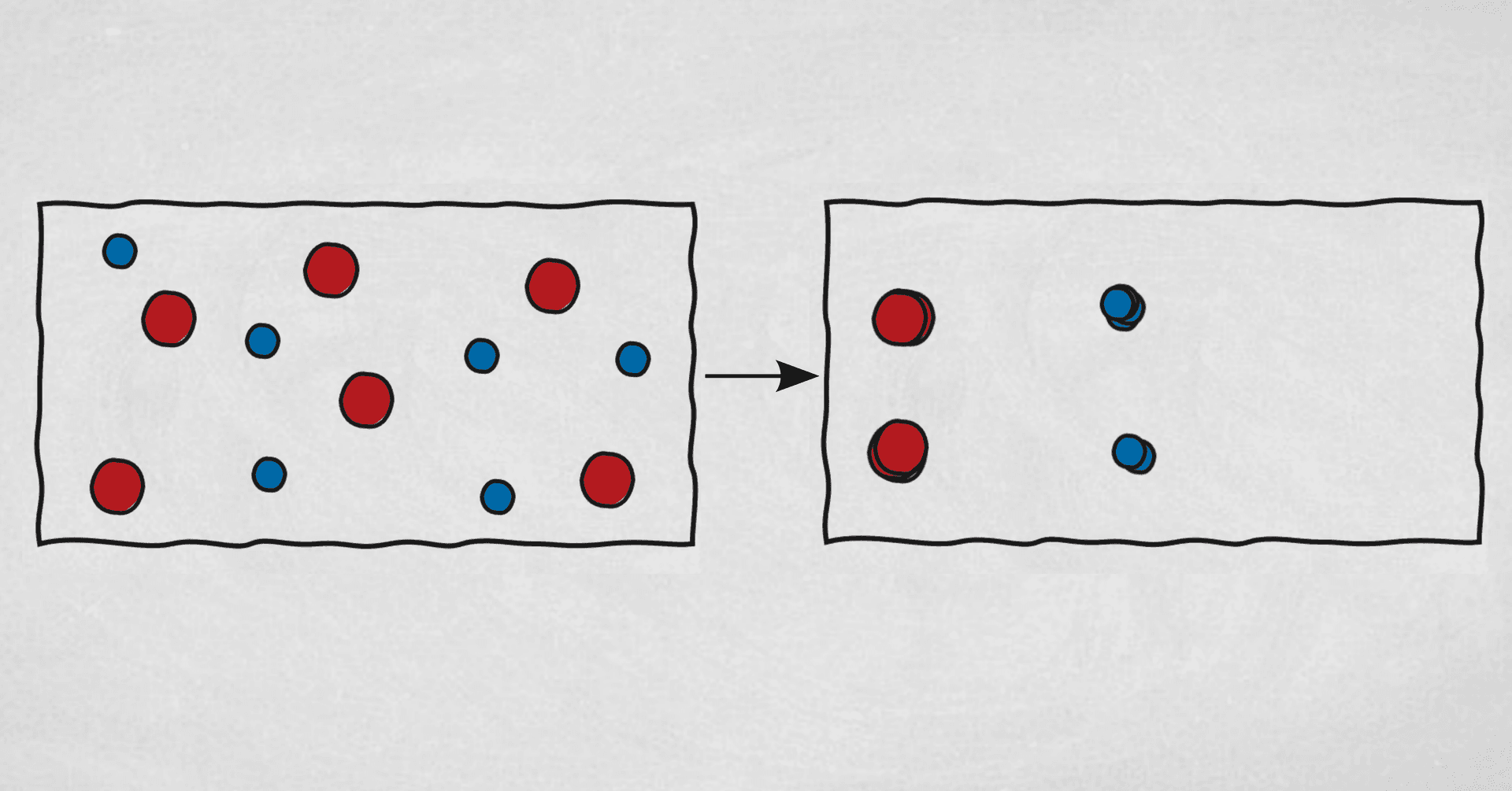
Particles suspended in fluid flow through a curved duct can focus to stable equilibrium positions in the duct cross-section due to the balance of two dominant forces - inertial lift force from axial flow and secondary drag force from cross-sectional vortices. Such particle focusing is exploited in various medical and industrial technologies aimed at separating particles by size. In this talk, we will present results of our numerical investigation of the dynamics of neutrally buoyant particles in fluid flow through curved ducts. We will show that rich bifurcations take place in the particle equilibria as a function of system parameters. We will offer insights on how these bifurcations in combination with particle dynamics can be exploited to separate particles of different sizes in circular and spiral ducts.

10.52843/cassyni.z2njqz
- Jul 4, 2023
- John-Paul Clarke
Airlines, aircraft manufacturers and propulsion solution providers are all under significant pressure from consumers, investors, and customers to reduce emissions and provide zero carbon emission flight. There is growing consensus that hydrogen as an energy source will play a key role in transforming aviation into a zero-carbon system over the next few decades. McKinsey & Company found that “hydrogen – as a primary energy source for propulsion, either for fuel cells, direct burn in thermal (gas turbine) engines or as a building block for synthetic liquid fuels – could feasibly power aircraft with entry into service by 2035 for short-range aircraft.” In this presentation, I will discuss a hydrogen fuel cell-electric motor-propeller driven regional aircraft that is currently under development for introduction into service in 2025 and show how regional aircraft powered by green hydrogen are economically competitive on a cost per available seat-mile (CASM) basis with carbon-based fueled aircraft when the novel hydrogen storage and distribution system is employed. I will also discuss the fundamental challenges with using fuel cell-electric propulsion on larger aircraft, as well as the aircraft and propulsion system characteristics that ultimately determine the need to transition to direct combustion of hydrogen.
10.52843/cassyni.h77cpb
- Jul 2, 2023
- Sheng Luan + 4 more
