


 Filter Filter
10.52843/cassyni.p5bqv9
- Dec 14, 2022
- Roberto Carlino
During this seminar, I will talk about three of the projects I’ve been involved with at NASA in the last few years: 1. **The Human Exploration Research Analog (HERA)** is a ground-based astronaut analog mission run at NASA’s JSC in Houston to study and evaluate impacts on the crew due to isolation, remoteness, and confined habitation. NASA scientists use the collected data to develop and verify countermeasures to reduce or mitigate psychological and physiological effects for future Deep Space missions. This simulation was a 45-day trip to Mars’s moon Phobos and back with the goal of performing geological operations with complete communications delays in effect. 2. **Astrobee** is a new class of free-flying robots that operates in the interior of the International Space Station (ISS). In addition to being a research platform for microgravity free-flying robotics, Astrobee improves the efficiency of ISS operations by providing flight and payload controllers with a mobile camera and a sensor platform. 3. NASA is developing new deployable structures and material technologies for solar sail propulsion systems destined for future low-cost deep space missions. NASA’s Advanced Composite Solar Sail System (ACS3) uses composite materials in its novel, lightweight booms that deploy from a Cubesat. Data obtained from ACS3 will guide the design of future larger-scale composite solar sail systems that could be used for several deep space exploration missions.
10.52843/cassyni.m7w98y
- Dec 13, 2022
- Alexander Doronin + 3 more
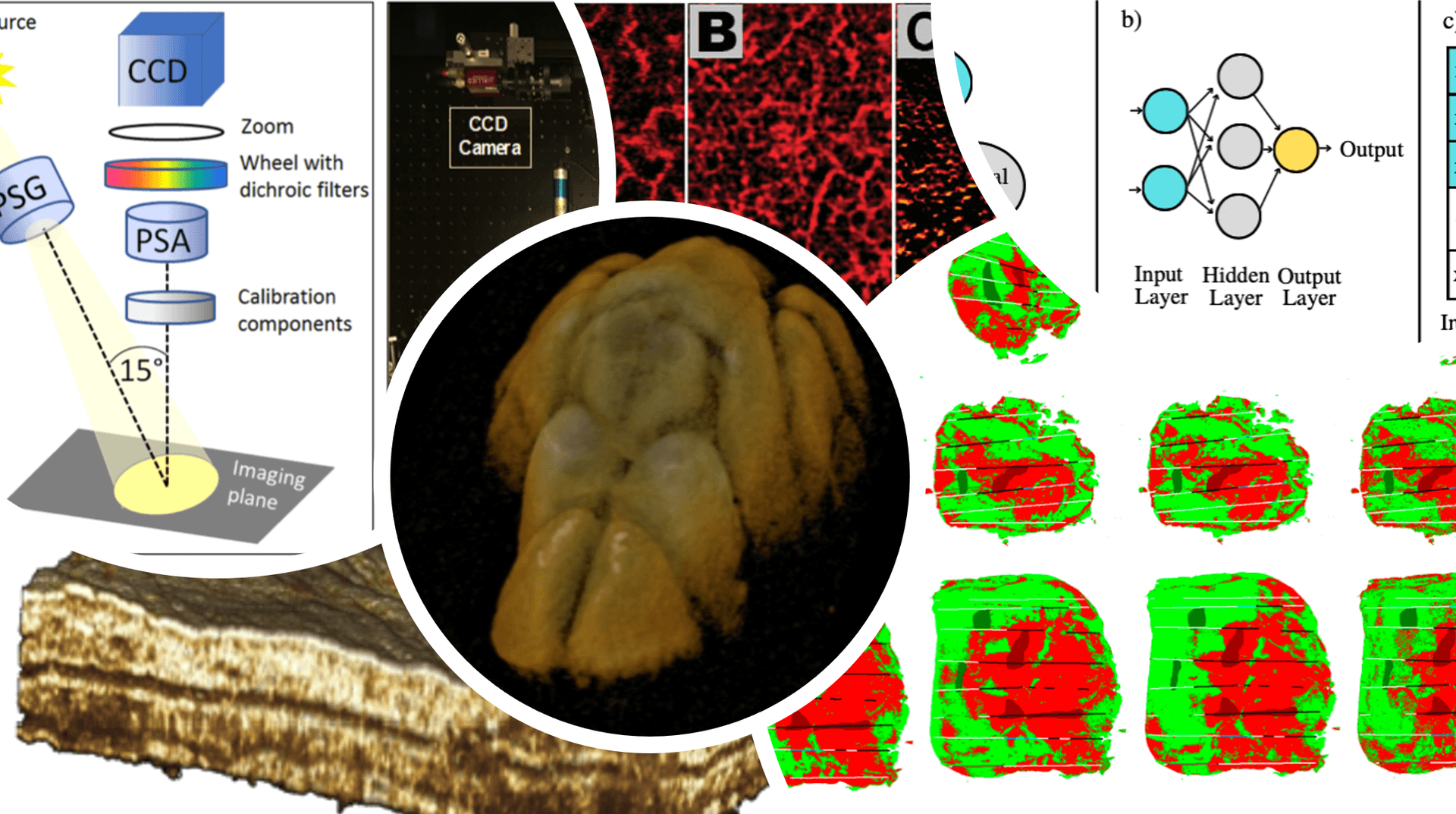
As a part of our collaboration with Ecole Polytechnique, France and Texas A&M University, USA we are excited to be able to host an in-person seminar this year, which will also be broadcast online. We cordially invite you to the talks which will feature world-renowned experts in biomedical optical imaging/light transport theory.

10.52843/cassyni.5jq6g9
- Dec 12, 2022
- J Crugnola-Humbert
The seminar is chaired by Julia Eisenberg and Matthias Scherer.

10.52843/cassyni.r8lp5h
- Dec 9, 2022
- Matt Sorola
Agonistic engagement is an approach to dialogue and debate that takes seriously the role of power, difference and ideological conflict. Although change is often associated with individuals’ transition into ‘friendly enemies’ (Addis, 2001), the transformational potential of agonistic engagement is realised in the formation of chains of equivalence (Brown, 2009; Mouffe, 2000, 2013). As a learning process, agonistic engagement stimulates critical reflection amongst individuals as they challenge their identity and reflect on those with divergent perspectives, and it is in this process that previously unrecognised areas of shared interests and common understandings are surfaced that can link marginalised voices together in chains of equivalence to challenge hegemonic narratives (Mouffe, 2013). Prior research explored the construction of spaces for agonistic engagement (Bebbington et al, 2007; Brown & Dillard, 2013, 2015) as a way to analyse their impact (Aleksandrov et al, 2018; Belluci et al, 2019; Laine and Vinnari, 2017; Tanima et al., 2020), and even identified the importance of identity construction within them (Milne and Tregidga, 2020). However, relatively little consideration has been given to the role of individuals’ within this process, and it is here that this research aims to contribute. Using a post-structurally pluralist articulation of agonistic engagement (Brown, 2017), prior research is reviewed to illustrate how individuals’ identities are currently being represented (Aleksandrov et al, 2018; Laine and Vinnari, 2017; Tregidga and Milne, 2020; Tanima et al., 2020). These representations, and their limitations with regard to individuals, are then discussed. Ultimately, this paper aims to surface issues for future research to consider regarding the dynamic, intersubjective (Modell, 2015; 2017), (re)construction of individuals’ identities.

10.52843/cassyni.jdw64v
- Dec 7, 2022
- Jana Sperschneider
Machine learning (ML) encompasses statistical methods that learn to identify patterns in complex datasets. Here, Jana reviews application areas in plant–pathogen interactions that have recently benefited from ML. She provides an under-the-hood glance into her developed suite of ML-based tools for pathogen effector prediction such as EffectorP. Jana will discuss common pitfalls and challenges she encountered during the development of ML approaches. Finally, she will highlight future opportunities for ML as a tool for dissecting plant–pathogen interactions, for example through integration of AlphaFold predictions or ML-driven effector gene annotation. Hosted by *New Phytologist* Editor Francis Martin

10.52843/cassyni.nj32xq
- Dec 6, 2022
- Malgorzata Peszynska
"If you never heard of methane hydrate, this might be good news". Methane hydrate is an ice-like crystalline substance made of water molecules encasing a molecule of methane, abundantly present in marine and Arctic sediments whenever pressure is high enough and temperature is low enough. Its presence is a “smoking gun” in climate science due to a possibility of release of methane gas into the atmosphere. On human time scales, methane hydrate is also an environmental hazard as well as a potential energy resource. In our work we considered a comprehensive PDE model for hydrate evolution which is a complex coupled system of 4 nonlinear equations coupled by thermodynamics constraints. To make progress towards the understanding of its mathematical structure, we must simplify the model, but the simplifications must be modest enough to keep the model relevant, mathematics interesting enough, and to allow for simulation of realistic case scenarios. In the talk we will present results of this compromise, and discuss the well-posedness of the model as well as numerical stability of finite volume schemes.

10.52843/cassyni.c6k11m
- Dec 5, 2022
- Vincent Bicudo De Castro
This article broadens the perspective of accounting beyond examining its role in sovereign states to examining the role of accounting within the performance of micronationality. With an increasing trend toward post-nationalism, the status quo of sovereign states as sole providers of citizenship has been challenged by micronations. This article examines how a micronation (i.e., the Principality of Hutt River), exercised from the State of Western Australia, adopted the formal trappings of a sovereign state to uphold its independence from its host state (i.e., the Commonwealth of Australia) and how the host state responded through boundary work. Accounting was mobilised by the host state to deliver a coup de grâce to the micronation by constraining its financial resources through a legal battle over tax collection. A documentary and bibliographic research approach was adopted to examine the micronation’s adopted trappings of state and the host state’s boundary work in dismissing any potential legitimacy for the micronation towards sovereignty. The micronation’s formal trappings of a sovereign state and the host state’s reaction through boundary work, both including accounting technologies, illuminates the notions of the advent and operation of micronations, in competition with sovereign states and the roles of accounting in the advance of a post-national zeitgeist. Paper: click [here](https://web.tresorit.com/l/ppMwH#-qmA5FzktkFhn5pgifqreQ) (via [Tresorit](https://tresorit.com/)).

10.52843/cassyni.nrg5c0
- Nov 17, 2022
- Clifford J Shultz, Ii + 7 more
Based on the recently published Springer book with the same title, the talk will involve a discussion by renowned well-being experts on the impact the pandemic has had on the health, safety, and socioeconomic well-being of communities around the world. The panelists will look at how community well-being has been impacted by the most significant crises of our time, the COVID-19 pandemic. Key takeaways from the discussion will be: lessons learned from the experiences in these countries and recommendations on mitigating the impact of future pandemics on the well-being of communities.
10.52843/cassyni.96ygbl
- Nov 3, 2022
- Wassim Hamidouche
Despite the enormous performance of Deep Neural Networks (DNNs), recent studies have shown their vulnerability to Adversarial Examples (AEs), i.e., carefully perturbed inputs designed to fool the targeted DNN. The literature is rich with many effective attacks to craft such AEs. Meanwhile, many defense strategies have been developed to mitigate this vulnerability. However, this latter showed their effectiveness against specific attacks and does not generalize well to different attacks. This talk presents a framework for defending the DNN classifier against adversarial samples. The proposed method includes a separate detector and a denoising block. The detector aims to detect AEs by characterizing them through natural scene statistics (NSS), where we demonstrate that the presence of adversarial perturbations alters these statistical features. The denoiser is based on Block Matching 3D (BM3D) filter fed by a threshold estimated by a Convolutional Neural Network (CNN) to project back the samples detected as AEs into their data manifold. We conduct a complete evaluation on three standard datasets: MNIST, CIFAR-10, and Tiny-ImageNet, compared with state-of-the-art defenses. Our experimental results have shown that the proposed detector achieves a high detection accuracy while providing a low false positive accuracy. Additionally, we outperform the state-of-the-art-defense techniques by improving the robustness of DNN’s.

10.52843/cassyni.sv7x51
- Nov 2, 2022
- Eva Wang
The circular economy (CE) – a new paradigm that encourages system thinking and innovation to reduce waste, increase resource efficiency, and keep materials in use – is gaining momentum in academic and managerial discourse (e.g., Bocken et al., 2016). Marketing scholars have developed a growing body of knowledge to support a shift in perspective from linear to circular business. Yet, while circular markets are critical for circular business to work, very few CE studies explicitly discuss markets and their making. Our systematic literature review revealed seven fields with implicit insights relevant to circular markets: circular business models, product-service systems, circular supply chains, industrial symbiosis, pro-circular customer behavior, eco-innovation, and technology infrastructure. To integrate these literatures, we used the guiding principles of market practices, which resulted in a new framework of circular market systems. This framework advances understanding of the CE at the nexus of sustainability, markets, and marketing, and offers integrative guideposts for future research.
